

Substack Vs Medium: Which is Better for Writers?
And can you actually make any money from either?

The debate about Substack Vs Medium has been around for years, and unfortunately, there is still no definitive answer. The right one for you will depend on your writing goals, your audience, your priorities, and various other factors.
I started writing on Medium first, but when they mistakenly revoked my partner program status, I looked for an alternative. Substack was the one getting the most mentions, so I set up an account and got started. A few weeks later, Medium reinstated my partner program status, so I ended up using both.
As with anything, they both have pros and cons. I actually think Medium is far more cost-effective for readers because you can access all paywalled content for $50 a year, whereas if you want access to paywalled content on Substack, you have to pay a minimum of $5 per month per writer.
Getting started and sharing your content
Both platforms are super easy to use. Once you’ve set up an account, you can start writing immediately about any topic you like.
Substack allows you to write directly from your personal profile or set up publications. This is useful if you want to write about different topics, as you can grow different audiences for each publication.
Medium also allows you to write straight from your account and set up publications or create reading lists (which can include your own and other writers’ posts). But you can also submit stories to other people's publications if your story is relevant and you meet their submission guidelines.
This allows you to write about any topic you like and tap into established audiences. You can write one-off pieces or become a regular contributor. I really like being able to submit stories to all kinds of publications, as it gives you the freedom to write about anything - you don’t have to pick a niche. Plus, there’s no pressure to be consistent, so you can write as often or as little as you like.
Cost
Both platforms are free to get started, and you can use the free version for as long as you like. You only need to pay if you want to earn.
Substack takes a 10% commission on everything you earn through paid subscriptions (you also pay Stripe fees). This means you only pay if you’re making money.
With Medium, you can only paywall your stories if you are a member. This does mean you have to pay to earn, but membership is $5 per month or $50 per year, so it’s a very small investment (I covered an annual membership with earnings from one story). And a membership also gives you access to paywalled stories from all other Medium writers.
Reach & audience
The thing many writers prefer about Medium is that you don’t have to build your own audience. You can share your stories, and Medium will put them in front of relevant people. The more interest your story gets, the more people it will get shown to. And if you’re writing for publications, those publications will already have an engaged audience.
That doesn’t mean you can’t share your work yourself. Free stories can be shared anywhere, and you’ll also get a friend link for any paywalled stories, allowing non-members to read your story without signing up.
People who read your stories can follow you and sign up to receive email notifications whenever you publish a new story. Every time you publish, you can opt in or out of sending an email notification. If you do share your stories by email, Medium will reward you.
Although you can grow followers and subscribers, you don’t get access to their email addresses, and you can only email them story notifications (which are auto-generated by Medium). You can’t send personalised content or round-ups, and you can’t move your audience away from the platform.
Substack doesn’t automatically give you reach. You have to be proactive in sharing your stories. But it does have lots of features that help you grow your audience, such as notes, chat, recommendations and referral programs.
Where Substack does have the advantage over Medium is that it allows you to grow an owned email list. You can send email-only content to your subscribers, and you can export the email addresses if you want to move to another platform in the future.
Making money
It is possible to make money on both platforms, but very few people make a living from it. If you’re hoping to replace your salary by writing for one of these platforms, don’t rush into quitting your day job. Most writers on Medium earn less than $100 per month, and you’re unlikely to earn much more than this on Susbtack in your first few months.
Medium works on an algorithm basis - the more reads your stories get, the more you earn. And if a story gets boosted, you earn even more. Boosted stories are stories selected by the Medium curation team to get pushed to a larger audience (usually because they are higher-quality). Some publication owners can nominate stories to be boosted, but not all of them get selected.
This passive way of earning can be nice, as you don’t have to generate paying subscribers to make money. However, it does mean your earnings can be inconsistent. You could make $1 one month and $1000 the next.
That said, where Medium has a huge advantage is that you can very easily import stories you’ve written for other platforms. All you need to do is go to stories, click import a story and paste the link to the original story. Medium will then pull it through and add a canonical link for search engines and a visible link to the original post for readers.
You can then paywall these stories and earn money. I’ve even had imported stories boosted in the past, and the earnings have covered my membership fee for the year. Not bad for content originally written for another platform. You also get rewarded if you bring new members to Medium via friend links and notifying followers by email, so sharing your Medium stories will help you increase your earning potential
To earn money on Substack, you have to offer paid subscriptions. The minimum subscription fee is $5 per month, but you can charge more.
If you go with the minimum, you’ll need twenty subscribers to make $100 per month. Twenty subscribers might not sound like many, but competition is high. You might be able to grow faster if you generate subscribers from outside of Substack, rather than only trying to get new readers from within the platform.
Attracting free subscribers can be hard enough. If you want to convert them into paying subscribers, you need to be prepared to put in a lot of effort, and you’ll have to give them something worth paying for.
Risk
My Medium partner program status was revoked by mistake, and it was only by luck that I was able to get reinstated. Many people get permanently revoked. If that happens, you’ve suddenly lost your revenue stream overnight.
But Substack is not without risk either. Your account can just as easily get banned, especially if you have a free account and are using it to push people to products and services away from the platform (many people don’t realise this breaches the terms and conditions).
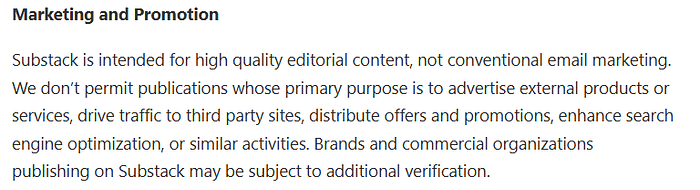
If you’re writing purely for the love of writing, you can always move to another platform. If you want to build an audience and make money from words, don’t rely too heavily on one platform. Make sure you back up all your content and export your email list regularly (if you’re using Substack).
My personal opinion
If you just want to write, either platform allows you to do it, and there’s no reason you can’t write for both. Use one for fiction, one for non-fiction, one for business, one for pleasure, one for serious topics, one for more entertaining stories, or use both for anything you want.
Personally, I prefer Medium because it is more focused on writing. Substack has notes and videos, and podcasts and lives, and chat, and sometimes it feels like it can’t make up its mind what it wants to be. However, if you want to build an email list, Substack is the better option (and there’s no reason you can’t then import your stories to Medium).
As a reader, I think it’s easier to filter out the crap on Medium because it’s purely about writing. And it’s more cost-effective as you pay one fee to access everything rather than having to sign up for various paid subscriptions.
As I said right at the beginning, it really depends on what you want to use it for. You can always try both for free (as a reader and a writer) and come to your own conclusions.